
Guide to Top Down Shades for Northwest Homes

A great room with expansive windows should feel bright, not exposed. A bedroom should welcome morning light without putting your privacy on display. That is exactly where this guide to top down shades begins: with a window treatment that lets you lower a shade from the top, admit natural light, and keep the lower portion of the window covered.
Top-down shades, often called top-down/bottom-up shades, offer a level of control that standard shades cannot. Instead of choosing between a fully raised shade and a fully lowered one, you can position the shade to suit the moment. For homeowners in Spokane, Coeur d'Alene, Hayden, Sandpoint, and throughout the Inland Northwest, that flexibility can make a meaningful difference in rooms with close neighbors, changing daylight, water views, or wide-open mountain views.
What Top Down Shades Actually Do
A traditional shade raises from the bottom and lowers from the top. A top-down/bottom-up shade can do both. Lower the top rail to bring daylight in across the upper part of the glass while the fabric remains in place below. Raise the bottom rail when you want an open view or easier access to the window.
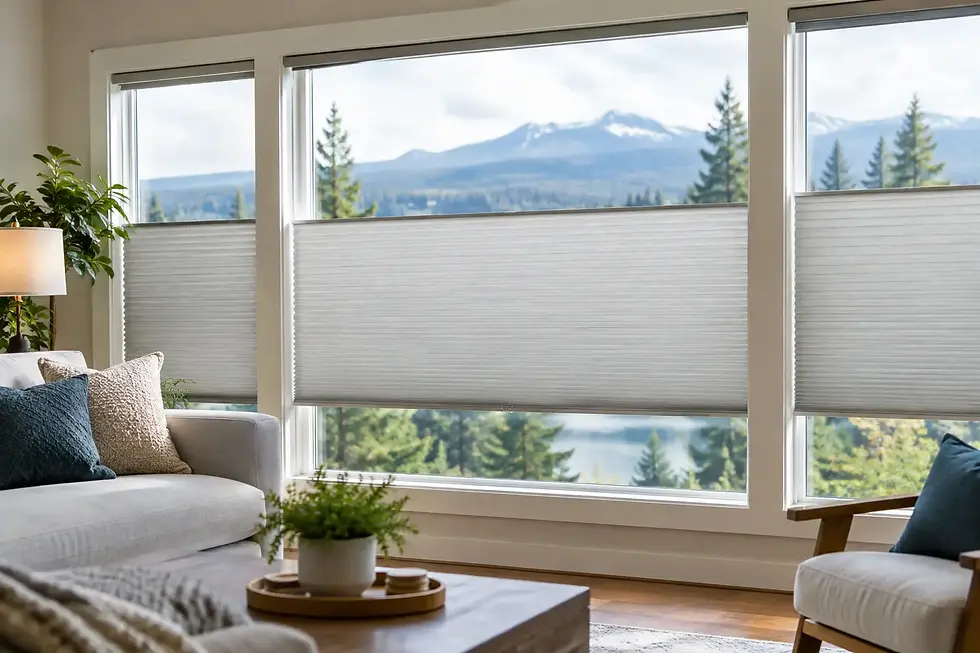
The concept is simple, but the impact is surprisingly refined. In a living room, top-down positioning can soften bright afternoon light without turning the room dark. In a bathroom, it can provide privacy where you need it while still keeping the space naturally lit. In a bedroom, it can prevent a direct sightline from outside while preserving the open, airy feeling that makes the room more comfortable.
This is not a one-size-fits-all solution. The amount of privacy, glare control, insulation, and view preservation you get will depend on the shade style, fabric opacity, window orientation, and how precisely the product is fitted.
Why Homeowners Choose Top-Down Shades
The main benefit is selective privacy. Many homes have windows that face a street, neighboring property, patio, or shared outdoor space. Closing a conventional shade can solve the privacy problem, but it also cuts off daylight and makes a room feel closed in. Top-down shades create a more balanced answer by covering the area people can see through most easily while leaving the upper glass open to the sky.
They are also useful for glare. In the Inland Northwest, low-angle sun can be particularly challenging in rooms with west- or east-facing windows. A shade positioned from the top can interrupt harsh light at eye level while allowing softer ambient light to enter above it. For spaces used for reading, working, watching television, or gathering with family, that can improve comfort without sacrificing the character of the room.
Top-down operation also supports a more intentional interior design. Rather than treating window coverings as something that is either open or closed, you can adjust the line of fabric to complement the room. The result feels tailored, especially on large windows, grouped windows, and glass doors where light control needs change throughout the day.
Choosing the Right Shade Style
Top-down functionality is available in several shade categories, and the best choice depends on how you use the room.
Cellular Shades for Comfort and Efficiency
Cellular shades are a popular choice for homeowners who want a clean look along with added insulation. Their honeycomb-shaped cells trap air, which can help reduce heat gain in summer and heat loss during colder months. That makes them especially worth considering for bedrooms, family rooms, and large windows exposed to winter weather.
Cellular fabrics come in different opacity levels. Light-filtering materials diffuse sunlight and maintain a soft glow. Room-darkening options provide stronger light control, though they do not always create complete blackout around the edges. If a bedroom needs near-total darkness, the design should account for side gaps, window shape, and any light leaking around the frame.
Roman Shades for a Softer, Designed Look
Roman shades bring texture, pattern, and a more decorative presence to the window. They are an appealing fit for dining rooms, sitting rooms, primary bedrooms, and homes with a layered, custom interior style. Top-down operation gives this classic shade a practical advantage, particularly where privacy matters but the room still benefits from daylight.
The trade-off is that Roman shades generally have a more substantial fabric presence than cellular or roller styles. They can be beautiful, but the stack at the top of the window and the selected fabric should be considered carefully, especially when preserving a view is a priority.
Woven Wood Shades for Warmth and Texture
Woven wood shades introduce natural texture through materials such as bamboo, grasses, reeds, and wood. They work particularly well in homes that lean rustic, organic, Northwest contemporary, or lake-inspired. With a privacy liner, they can offer a strong balance of texture and function.
Because woven materials have natural variations and filtered gaps, they are not usually the first choice when precise privacy or room darkening is the goal. They are better for homeowners who want character at the window and appreciate a softer, more organic light effect.
Roller and Solar Shades for Clean Lines
Roller shades and solar shades suit modern interiors, large glass expanses, and rooms where the view is central to the design. Solar fabrics can reduce glare and UV exposure while retaining some outward visibility during daylight hours. However, that daytime visibility does not guarantee nighttime privacy. When interior lights are on, people outside may be able to see in depending on the fabric openness and conditions.
Top-down configurations for roller-style products can be more specialized than other shade types. This is one reason a professional consultation is valuable: the best-looking option on a sample board may not provide the exact operation or privacy performance your room requires.
Light Filtering, Privacy, and View: Set Priorities First
Before choosing a fabric, decide which need leads the room. You can have excellent privacy, beautiful filtered light, and an open view, but one product rarely maximizes all three at once.
For example, a front-facing living room may prioritize daytime privacy and a soft glow. A primary bedroom may prioritize room darkening and insulation. A home office may need glare reduction without making video calls feel dim. A lakeside or hillside home may place the highest value on preserving a view while controlling harsh sun.
It also helps to consider when the room is used. Daytime privacy and nighttime privacy are different challenges. A light-filtering shade may feel perfectly private during the day but become more transparent after dark when lights are on indoors. In that case, a room-darkening fabric, privacy liner, drapery layer, or a different shade type may be the better long-term decision.
Cordless and Motorized Operation
Top-down shades are most often selected with cordless operation, which keeps the window clean and avoids dangling lift cords. This is a practical choice for families with children and pets, as well as anyone who wants a less cluttered look.
Motorization is worth considering for hard-to-reach windows, tall great rooms, or multiple shades that should move together. With compatible smart home controls, shades can be adjusted by remote, wall control, app, or scheduled scenes. You might raise shades in the morning, lower them during the brightest afternoon hours, and close them in the evening for privacy.
Motorization adds cost, and batteries, wiring options, and control preferences should be discussed early. For some windows, cordless manual operation is all that is needed. For a wall of windows or a high clerestory installation, motorization can turn a beautiful product into an easier one to live with every day.
Why Custom Measurement Matters
Top-down shades depend on accurate alignment and smooth movement. Even a small measuring error can affect light gaps, mounting clearance, operation, and the finished appearance. Window depth, trim, handles, tilt-in features, and whether the shade is mounted inside or outside the frame all matter.
A custom consultation also gives you the opportunity to see fabrics in your home rather than under showroom lighting. The same material can look warmer, cooler, more opaque, or more reflective depending on your wall colors, flooring, window direction, and surrounding landscape.
At Coeur Window Coverings, the process is designed to replace guesswork with clear recommendations, precise measurements, and professional installation. That matters when you are making a lasting investment in windows that shape how your home feels every day.
The right top-down shade should not make you choose between natural light and privacy. It should give you a home that feels comfortable, protected, and beautifully your own, from the first bright morning through the quiet hours after sunset.


Comments