
Are Motorized Shades Worth It for Your Home?

A wall of windows can transform a home, making it feel extraordinary—until the afternoon sun fills the living room with glare, or closing every shade at night becomes a nightly ritual. This leads homeowners to wonder: are motorized shades worth it?
For many homes, especially those with tall, wide, or hard-to-reach windows, the answer is yes. Motorization is more than just a high-tech feature. When incorporated with consideration for the room, lighting, and household lifestyle, it simplifies the use of window coverings and enhances the privacy, comfort, and energy efficiency you desire.
However, motorized shades are not the ideal choice for every window. Their value depends on your priorities, the style of the shades, your home's wiring or power options, and the quality of the design and installation.
What Motorized Shades Change Day to Day
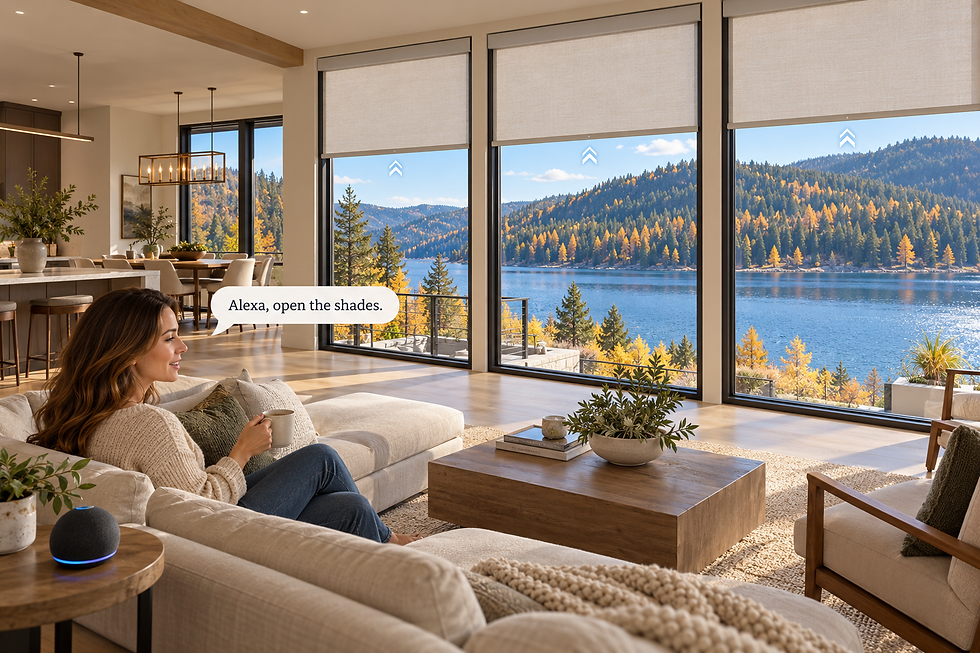
A motorized shade can be raised and lowered using a remote, wall control, app, or compatible smart-home system. Depending on the setup, you can manage a single shade, a group of shades, or an entire room simultaneously. You also have the option to set schedules based on the time of day.
The practical difference is often underestimated until experienced firsthand. Shades that are difficult to reach or manually operate tend to remain in one position. This can lead to rooms being exposed to harsh sunlight, a lack of privacy after dark, or missing out on the insulating benefits of closing shades at the right time. Automation eliminates this hassle.
In a primary bedroom, a scheduled blackout shade can lower before bedtime and rise gently in the morning. In a great room, solar shades can lower during the brightest part of the afternoon without making the space feel enclosed. In a dining room with several large windows, a single command can provide evening privacy in seconds.
For busy families, frequent travelers, and homeowners who value a home that functions as beautifully as it looks, this consistency often offers the true benefit.
Are Motorized Shades Worth It for Difficult Windows?
This is a prime example for motorization. Windows located high above a stair landing, behind a soaking tub, over kitchen counters, or in a vaulted great room should not necessitate the use of a ladder, a pole, or a compromise on light control. Motorized shades ensure these windows remain functional rather than merely decorative.
Large groups of windows are another ideal candidate. While it's possible to operate multiple manual shades individually, it is seldom convenient. Grouping them provides the room with a more uniform appearance and simplifies adjusting to changing light conditions. This is particularly beneficial in Spokane and North Idaho homes where expansive views are integral to the design, but seasonal sunlight and early winter evenings make light management more apparent.
Motorization can also be a considerate choice for accessibility. Homeowners with limited mobility, arthritis, or shoulder issues can maintain independent control over their window coverings without struggling with cords, chains, or hard-to-reach hardware.
The Benefits Go Beyond Convenience
While convenience is the primary advantage, well-crafted motorized shades can simultaneously help achieve various daily objectives.
Better light and glare control
Sunlight shifts rapidly throughout a room. On a sunny afternoon, glare can make it hard to watch television, dull artwork, and create discomfort in a home office. Automated schedules or scene settings allow shades to adjust before the room becomes uncomfortable.
The essential factor is choosing the appropriate fabric and opacity. A solar shade can reduce glare while maintaining the view. A room-darkening roller shade provides greater privacy and light control. A cellular shade can offer additional insulation. Motorization enhances the functionality of the shade, but the shade itself must still suit the room.
More reliable privacy
Privacy isn't solely a nighttime issue. Bedrooms, bathrooms, and living areas facing the street may require privacy at various times during the day. Motorized shades allow for a whole-home "evening" setting that can lower chosen coverings simultaneously. This reduces the chance of overlooking a window when guests arrive or when the sun sets earlier in the fall.
Help with comfort and energy use
While window coverings are not a substitute for efficient windows or proper insulation, they can assist in controlling heat gain and loss. Closing insulating shades during chilly nights can enhance comfort near the glass, and lowering shades during direct summer sunlight can decrease the heat entering a room.
Automation simplifies maintaining these practices. If the shades close automatically on a schedule, you won't need to remember to do it daily. The results can vary depending on window orientation, glass type, shade construction, and home usage, so it's best to view energy performance as a beneficial bonus rather than a guaranteed outcome.
A cleaner, safer look
Many motorized systems eliminate dangling cords and chains. That creates a cleaner profile, which suits modern interiors as well as more traditional spaces where the fabric, trim, or drapery should remain the visual focus. Cord-free operation is also a welcome safety consideration in homes with young children and pets.
What Does Motorization Cost, and What Are the Trade-Offs?
Motorized shades are more expensive than similar manual shades because they include motors, controls, power components, and often require programming. The exact cost can vary greatly depending on factors such as window size, fabric, shade type, number of windows, control method, and whether they are part of a larger smart-home system.
Battery-powered motors are favored because they eliminate the need to open walls or install new electrical wiring. They are a great option for many existing homes, although batteries will eventually need replacement or recharging depending on the system. Hardwired motorization is a smart option during new construction or major renovations, especially for numerous windows, but it requires early planning and coordination.
Maintenance is another factor to consider. Quality motors are built for frequent use, but motorized shades have more components than manual ones. Opting for reliable products, ensuring accurate measurements, and having professional installation can help safeguard the investment.
For a single, easily accessible guest-room window that is seldom adjusted, manual operation might be perfectly reasonable. However, for 12 windows in a sunny great room, the convenience and control can quickly justify the higher initial expense.
Smart Home Integration: Useful, Not Required
You don't need a fully connected home to benefit from motorized shades. A simple remote or wall-mounted control may be all a homeowner desires. It's easy to use, reliable, and guest-friendly.
Smart-home integration becomes beneficial when you want to set schedules, use voice control, or coordinate scenes with lighting and other systems. For instance, a "movie night" scene could lower room-darkening shades while dimming the lights. A vacation schedule can vary shade movement to make an unoccupied home look lived in.
The best strategy is to select technology that you will actually use. A thoughtful consultation should begin with your routines, not with the most complex control system available. You can keep the operation simple now while choosing a platform that allows for future expansion.
How to Decide Which Windows Should Be Motorized
Instead of automatically motorizing every window, start with the areas where it is most important. Focus on windows that are difficult to reach, rooms with strong sunlight or privacy concerns, large groups of shades, and spaces that are used daily. Common starting points include bedrooms, great rooms, media rooms, home offices, and windows near stairs.
Next, think about visual consistency. In open-concept spaces, having matching shades might be important even if only certain windows require motorization. A custom plan can balance aesthetics, functionality, and budget without making the decision feel like an all-or-nothing choice.
Accurate measurement is as crucial as the technology. A poorly fitting shade can result in light gaps, poor operation, or an unfinished look. Consider fabric choice, mounting depth, window trim, power access, and control placement carefully before ordering.
The Best Value Comes From a Custom Plan
Motorized shades are most beneficial when they address specific issues in your home, such as challenging windows, uncomfortable afternoon sunlight, inconsistent privacy, or an overwhelming number of coverings to manage individually. They should enhance the architecture and furnishings rather than appear as an afterthought gadget.
At Coeur Window Coverings, the aim of an in-home consultation is to clarify these choices. Observing the actual windows, the light's movement through the room, and your intended use of the space results in better recommendations than merely choosing a motor from a product list.
If you often leave shades open due to inconvenience or only close them after the sun has already disturbed the room, motorization might be more of a practical upgrade than a luxury. The right system quietly enhances your control over the comfort, privacy, and beauty of the home you cherish.


Comments